
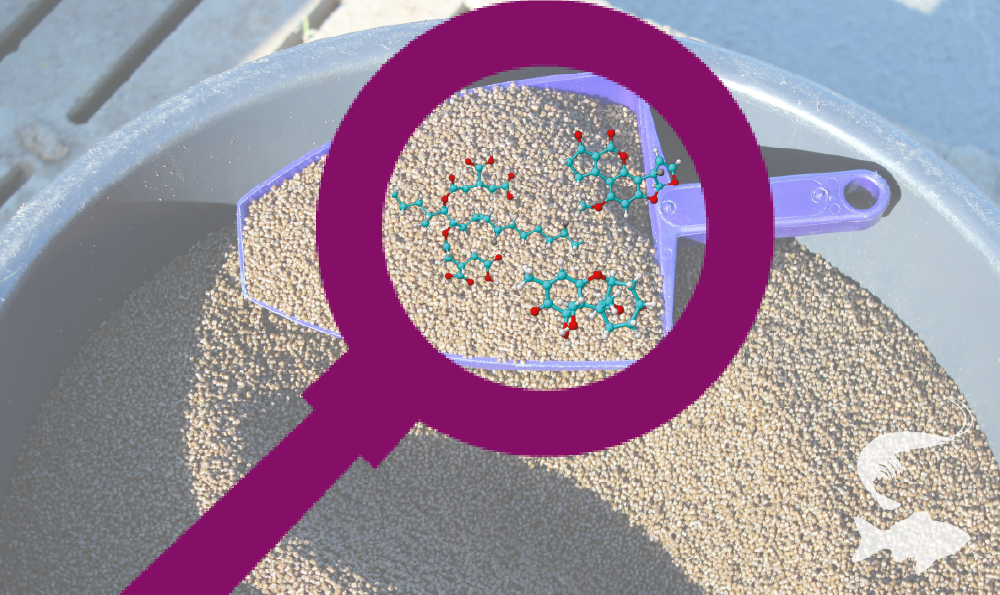
This paper, published at the beginning of 2026, confirms a high prevalence of mycotoxins in complete fish feeds: 70 to 90% of the samples analyzed contain at least one toxin, with a dominant presence of deoxynivalenol (DON), zearalenone (ZEN), fumonisins (FB), and, to a lesser extent, aflatoxins. The detected levels are highly variable, with very frequent co-contaminations.
Beyond their presence, the review lists the differentiated biological effects according to the mycotoxins:
- Deoxynivalenol (DON): mainly associated with a decrease in feed intake and a reduction in growth (up to 20–30%). It also disrupts intestinal integrity and induces an inflammatory response.
- Fumonisins (FB): involved in metabolic disorders and liver lesions. They affect lipid metabolism and can impair growth and feed efficiency.
- Zearalenone (ZEN): known for its endocrine effects, it disrupts reproductive functions and can alter hormonal balances, with potential impacts on reproduction and development.
- Zearalenone (ZEN): known for its endocrine effects, it disrupts reproductive functions and can alter hormonal balances, with potential impacts on reproduction and development.
Transversally, several of these toxins contribute to immunosuppression (decreased lysozyme, complement alteration), an increase in oxidative stress, and increased susceptibility to diseases. The co-occurrence of mycotoxins amplifies these effects.
Conclusion: the combination of high occurrence and specific effects depending on the mycotoxins makes their management a central issue in aquaculture. Even at low doses, their impact on fish growth, health, and robustness is significant.
Reference : Bittner, Mikołaj, Paweł Brzuzan, and Maciej Woźny. “Occurrence of mycotoxins in fish feed and its consequences for aquaculture with special regard to the role of insect products.” Mycotoxin Research 42.1 (2026): 20.